Born from a dark genius
Airwolf was the brainchild of Dr. Charles Henry Moffet, a brilliant but deeply unstable scientist working for the government agency known as the Firm. The aircraft was conceived as the ultimate covert weapon: a helicopter that looked conventional but concealed performance and armament far beyond anything in service.
When Moffet went rogue and stole his own creation, the Firm turned to the one pilot capable of bringing it back — Stringfellow Hawke. Hawke recovered Airwolf, then hid it deep in a desert canyon known as the Lair, flying it only on his own terms.
Speed beyond belief
What set Airwolf apart was its turbines. Engaging the turbos let the aircraft punch past the speed of sound — genuinely supersonic flight from a helicopter — and climb to altitudes no rotorcraft had any business reaching. On screen it could chase down fighter jets, evade missiles, and cross continents at will.
An arsenal under the skin
Beneath its sleek black-and-grey skin, Airwolf hid retractable weapon systems: chain guns in the chin and wing-roots, and pods that deployed an array of missiles and rockets. Sensors, countermeasures and sunburst flares rounded out a machine designed to win any fight it couldn't simply outrun.
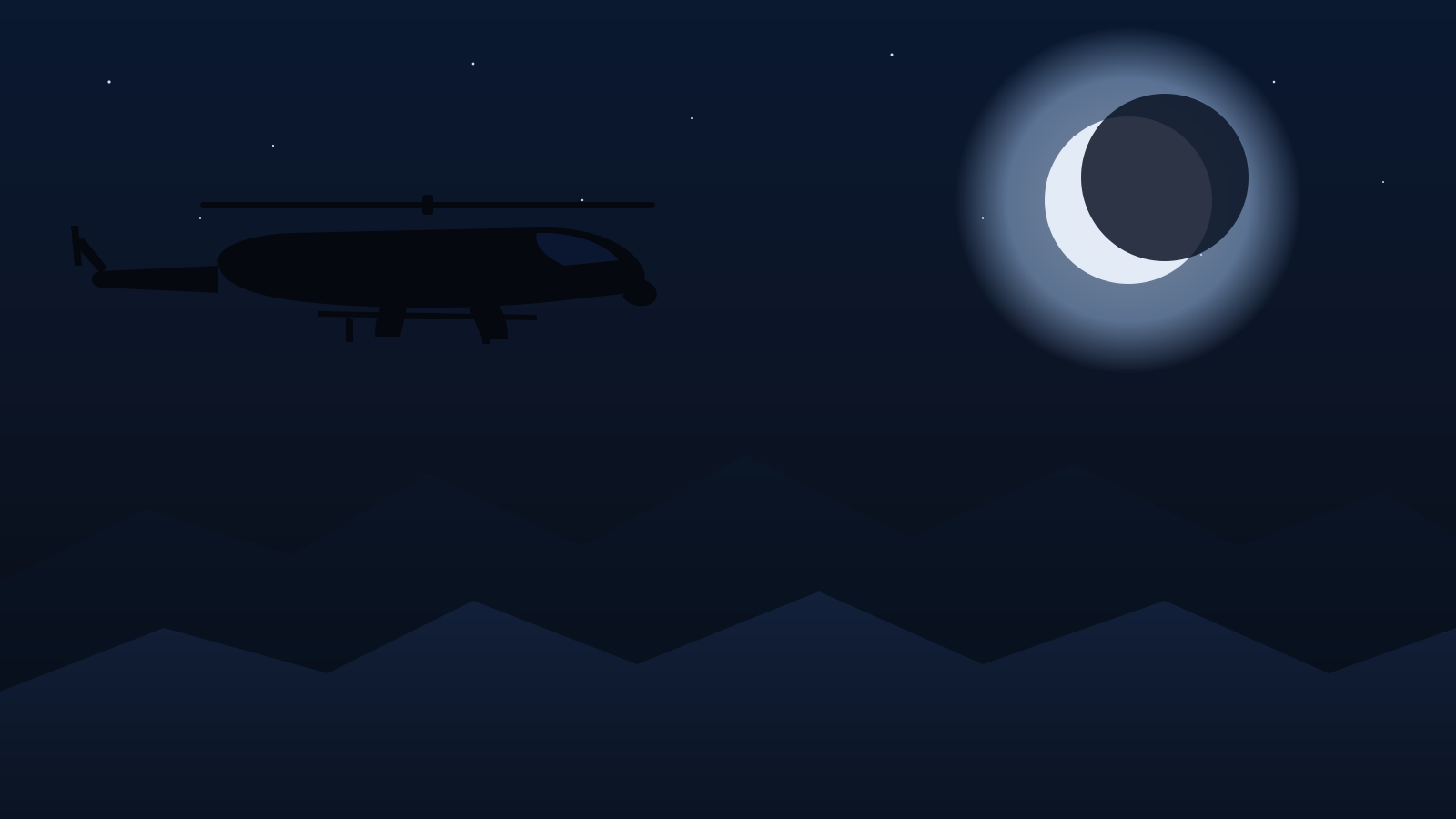
The look: Airwolf's menacing silhouette — swept lines, that distinctive nose, the deep matte finish — made it as much a star of the show as any actor. To a generation of fans, the sound of its theme and the flare of its turbos are pure 1980s magic.
The real aircraft behind the legend
In reality, Airwolf was a modified Bell 222, a sleek civilian twin-engine helicopter dressed with film add-ons — fairings, fake weapon bays and that unmistakable paint scheme. The weapons and supersonic flight were the magic of model work, effects and imagination, but the airframe that did the real flying was a genuine, graceful machine in its own right.